🎉 Up to 70% Off Selected ItemsShop Sale

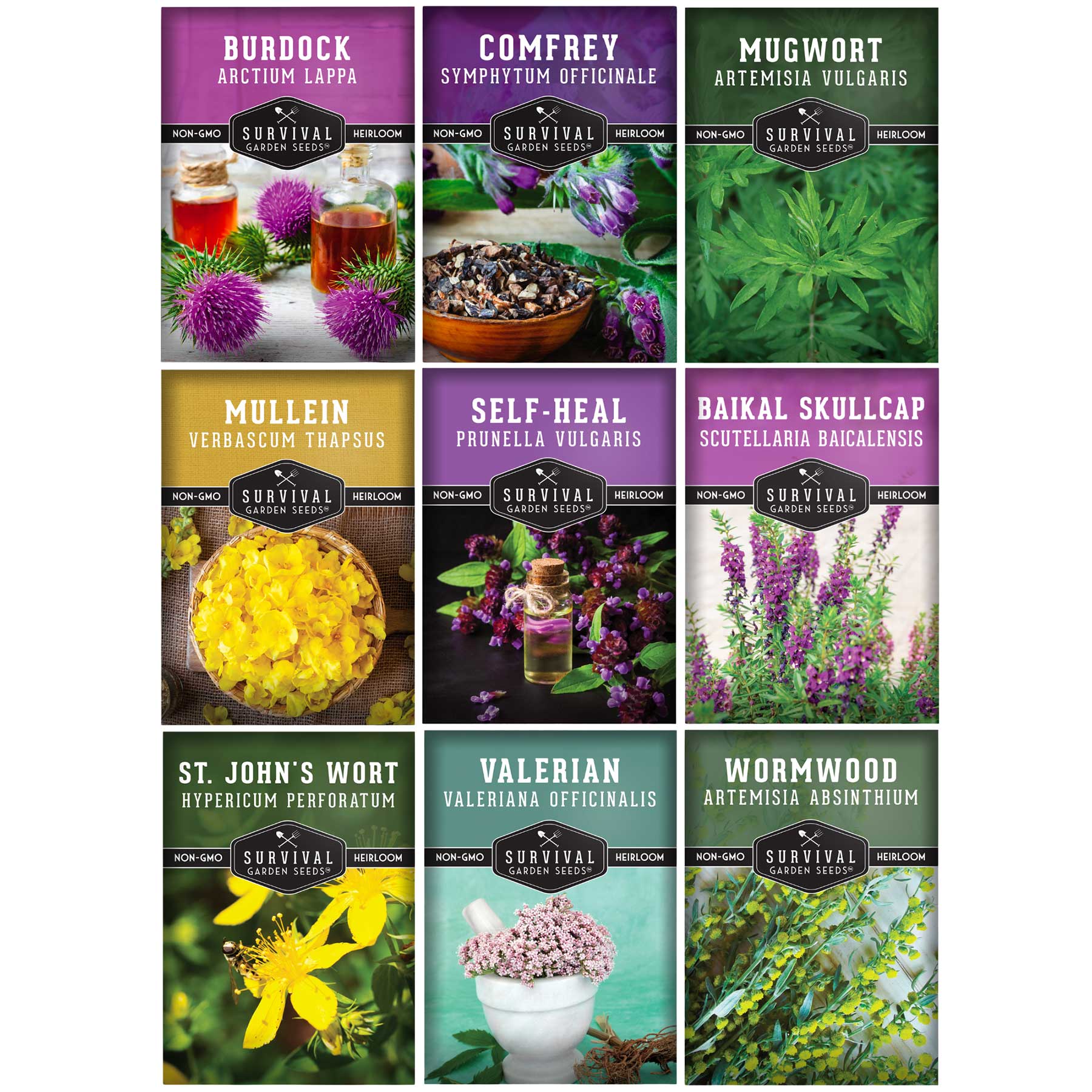
Herbalist Seed Bundle - 9 Important Medicinal Herbs
Survival Garden Seeds website exclusive!
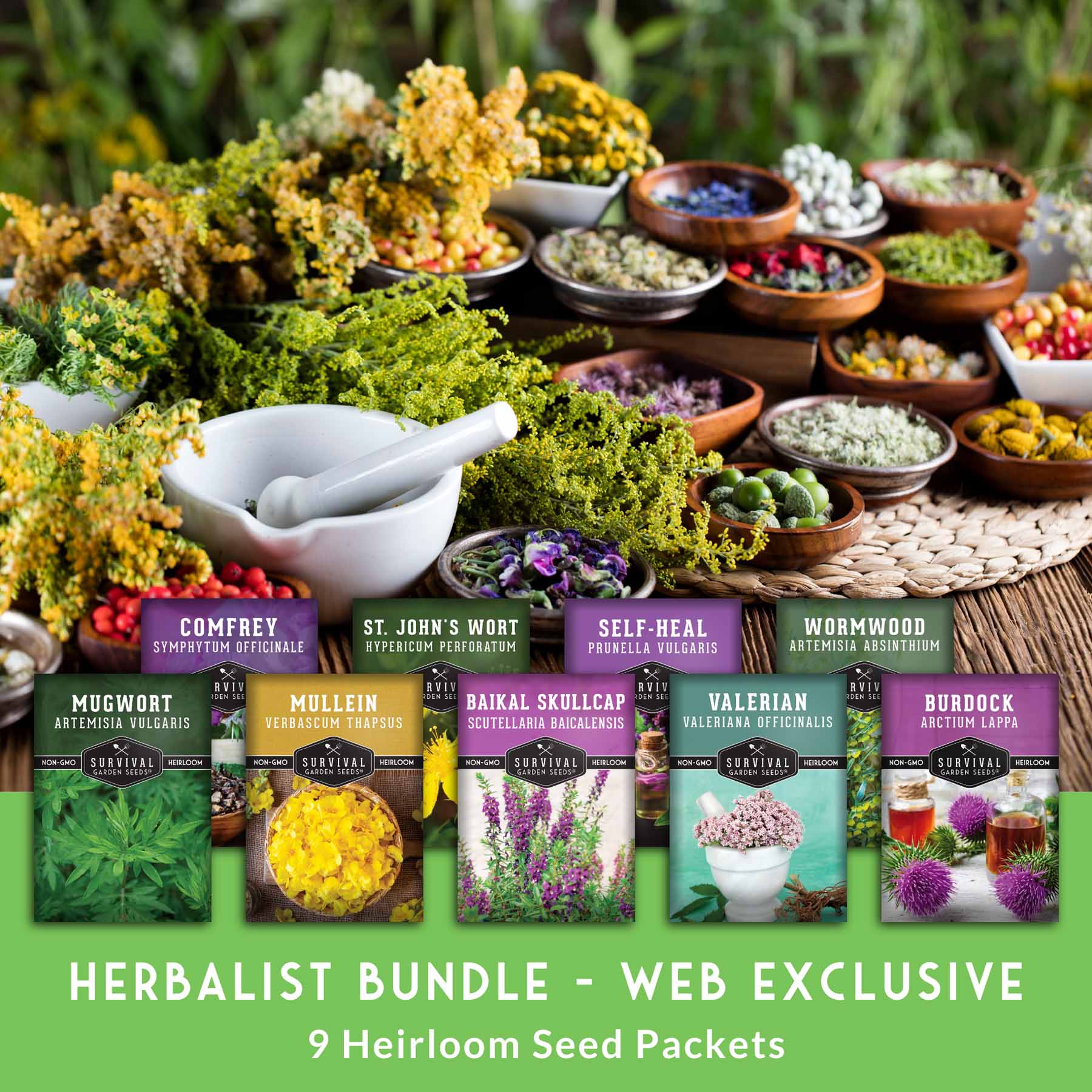
Plant and cultivate your own wellness garden with the Herbalist Bundle, a curated collection of nine powerful medicinal herbs known for their traditional uses and natural healing properties. This bundle of potent apothecary seeds includes Burdock, Comfrey, Mugwort, Mullein, Self-Heal, St. John's Wort, Valerian, Wormwood, and Baikal Skullcap. We’ve chosen these healing herbs for their unique benefits and time-honored role in herbal medicine.
Always consult a qualified medical professional regarding your health history and current medications before using any medicinal herb.
Note: Some species in this bundle are vigorous spreaders and may become invasive if not properly managed. We recommend growing them in containers, raised beds, and using other containment strategies to prevent unwanted spread.
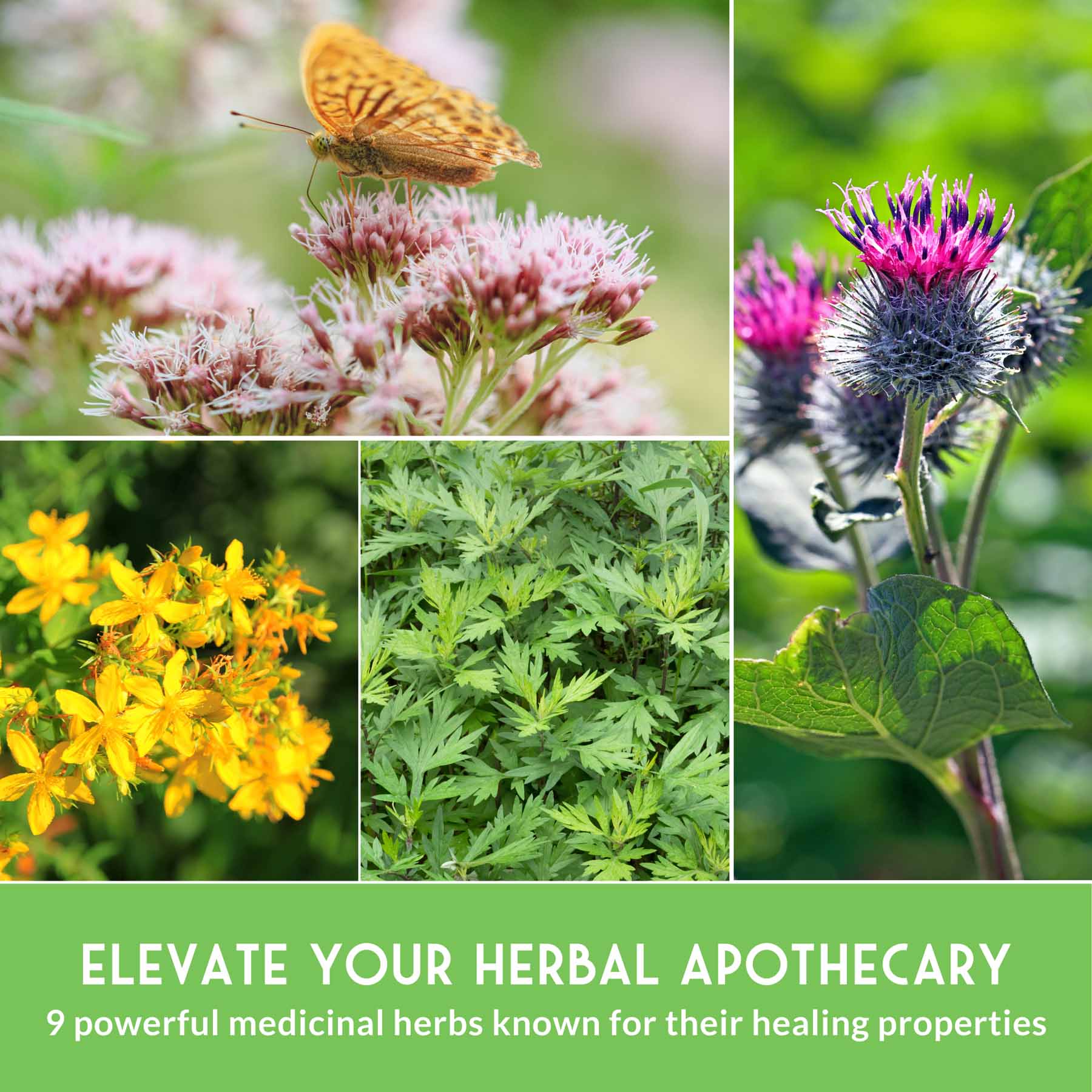
- Burdock (Arctium lappa) – This biennial plant can be grown as both an herb or a vegetable for its deep taproot. It is traditionally used to support liver health, detoxification, and skin health.
- Comfrey (Symphytum officinale) – A fast-growing, resilient perennial with roots, leaves, and flowers used traditionally in herbal medicine. It's also a beneficial herb around the homestead, enriching compost, suppressing weeds, and serving as food for livestock.
- Mugwort (Artemisia vulgaris) – Mugwort is a perennial herb that survives even in drought conditions. It has been traditionally used as a medicinal herb to make tincture, extract, nerve tonic, herbal tea, powder, and essential oil, especially in Chinese Traditional Medicine
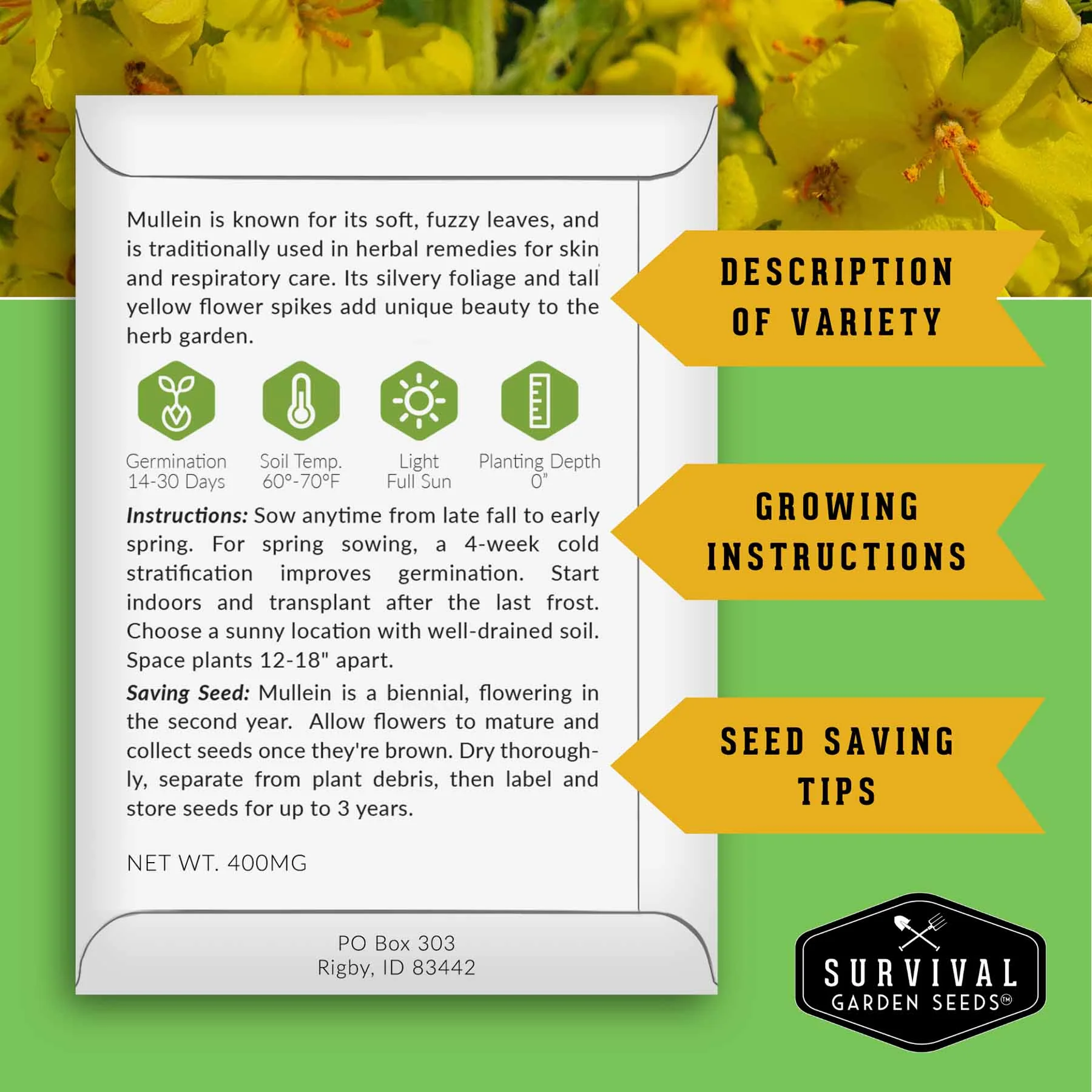
- Mullein (Verbascum thapsus) – This biennial plant produces towering stalks with soft, velvety leaves. It is traditionally used for respiratory support.
- Self-Heal (Prunella vulgaris) – This hardy perennial herb, also known as All-Heal, Heal-All, and Woundwort, is a low-growing plant that makes a good groundcover, with purple blooms that delight pollinators. Self-heal is best known for its traditional uses in skin and wound support.
- St. John's Wort (Hypericum perforatum) – This cheery midsummer bloomer produces an abundance of bright yellow flowers. Used in herbalism for centuries, St. John’s Wort’s medicinal properties are most sought after for its potential mood-lifting benefits.
- Valerian (Valeriana officinalis) – A tall perennial herb with fragrant, pale pink to white blooms. Valerian root has been used traditionally to promote relaxation and support restful sleep.
- Wormwood (Artemisia absinthium) – Known for its silvery-green, aromatic foliage, Wormwood is a hardy, drought-tolerant herb. It has a long history in digestive tonics and is famously associated with absinthe. Take care when planting as it can be aggressive in the garden.
- Baikal Skullcap (Scutellaria baicalensis) – A.K.A. Chinese Skullcap, this medicinal herb has violet-blue flowers and plays an important role in Traditional Chinese Medicine (TCM). Not to be confused with American Skullcap, its roots are traditionally used to support liver function, aid detoxification, and help balance inflammatory responses.
$5.39
Original: $17.98
-70%Herbalist Seed Bundle - 9 Important Medicinal Herbs—
$17.98
$5.39More Images


Herbalist Seed Bundle - 9 Important Medicinal Herbs
Survival Garden Seeds website exclusive!
Plant and cultivate your own wellness garden with the Herbalist Bundle, a curated collection of nine powerful medicinal herbs known for their traditional uses and natural healing properties. This bundle of potent apothecary seeds includes Burdock, Comfrey, Mugwort, Mullein, Self-Heal, St. John's Wort, Valerian, Wormwood, and Baikal Skullcap. We’ve chosen these healing herbs for their unique benefits and time-honored role in herbal medicine.
Always consult a qualified medical professional regarding your health history and current medications before using any medicinal herb.
Note: Some species in this bundle are vigorous spreaders and may become invasive if not properly managed. We recommend growing them in containers, raised beds, and using other containment strategies to prevent unwanted spread.
- Burdock (Arctium lappa) – This biennial plant can be grown as both an herb or a vegetable for its deep taproot. It is traditionally used to support liver health, detoxification, and skin health.
- Comfrey (Symphytum officinale) – A fast-growing, resilient perennial with roots, leaves, and flowers used traditionally in herbal medicine. It's also a beneficial herb around the homestead, enriching compost, suppressing weeds, and serving as food for livestock.
- Mugwort (Artemisia vulgaris) – Mugwort is a perennial herb that survives even in drought conditions. It has been traditionally used as a medicinal herb to make tincture, extract, nerve tonic, herbal tea, powder, and essential oil, especially in Chinese Traditional Medicine
- Mullein (Verbascum thapsus) – This biennial plant produces towering stalks with soft, velvety leaves. It is traditionally used for respiratory support.
- Self-Heal (Prunella vulgaris) – This hardy perennial herb, also known as All-Heal, Heal-All, and Woundwort, is a low-growing plant that makes a good groundcover, with purple blooms that delight pollinators. Self-heal is best known for its traditional uses in skin and wound support.
- St. John's Wort (Hypericum perforatum) – This cheery midsummer bloomer produces an abundance of bright yellow flowers. Used in herbalism for centuries, St. John’s Wort’s medicinal properties are most sought after for its potential mood-lifting benefits.
- Valerian (Valeriana officinalis) – A tall perennial herb with fragrant, pale pink to white blooms. Valerian root has been used traditionally to promote relaxation and support restful sleep.
- Wormwood (Artemisia absinthium) – Known for its silvery-green, aromatic foliage, Wormwood is a hardy, drought-tolerant herb. It has a long history in digestive tonics and is famously associated with absinthe. Take care when planting as it can be aggressive in the garden.
- Baikal Skullcap (Scutellaria baicalensis) – A.K.A. Chinese Skullcap, this medicinal herb has violet-blue flowers and plays an important role in Traditional Chinese Medicine (TCM). Not to be confused with American Skullcap, its roots are traditionally used to support liver function, aid detoxification, and help balance inflammatory responses.
Product Information
Product Information
Shipping & Returns
Shipping & Returns
Description
Survival Garden Seeds website exclusive!
Plant and cultivate your own wellness garden with the Herbalist Bundle, a curated collection of nine powerful medicinal herbs known for their traditional uses and natural healing properties. This bundle of potent apothecary seeds includes Burdock, Comfrey, Mugwort, Mullein, Self-Heal, St. John's Wort, Valerian, Wormwood, and Baikal Skullcap. We’ve chosen these healing herbs for their unique benefits and time-honored role in herbal medicine.
Always consult a qualified medical professional regarding your health history and current medications before using any medicinal herb.
Note: Some species in this bundle are vigorous spreaders and may become invasive if not properly managed. We recommend growing them in containers, raised beds, and using other containment strategies to prevent unwanted spread.
- Burdock (Arctium lappa) – This biennial plant can be grown as both an herb or a vegetable for its deep taproot. It is traditionally used to support liver health, detoxification, and skin health.
- Comfrey (Symphytum officinale) – A fast-growing, resilient perennial with roots, leaves, and flowers used traditionally in herbal medicine. It's also a beneficial herb around the homestead, enriching compost, suppressing weeds, and serving as food for livestock.
- Mugwort (Artemisia vulgaris) – Mugwort is a perennial herb that survives even in drought conditions. It has been traditionally used as a medicinal herb to make tincture, extract, nerve tonic, herbal tea, powder, and essential oil, especially in Chinese Traditional Medicine
- Mullein (Verbascum thapsus) – This biennial plant produces towering stalks with soft, velvety leaves. It is traditionally used for respiratory support.
- Self-Heal (Prunella vulgaris) – This hardy perennial herb, also known as All-Heal, Heal-All, and Woundwort, is a low-growing plant that makes a good groundcover, with purple blooms that delight pollinators. Self-heal is best known for its traditional uses in skin and wound support.
- St. John's Wort (Hypericum perforatum) – This cheery midsummer bloomer produces an abundance of bright yellow flowers. Used in herbalism for centuries, St. John’s Wort’s medicinal properties are most sought after for its potential mood-lifting benefits.
- Valerian (Valeriana officinalis) – A tall perennial herb with fragrant, pale pink to white blooms. Valerian root has been used traditionally to promote relaxation and support restful sleep.
- Wormwood (Artemisia absinthium) – Known for its silvery-green, aromatic foliage, Wormwood is a hardy, drought-tolerant herb. It has a long history in digestive tonics and is famously associated with absinthe. Take care when planting as it can be aggressive in the garden.
- Baikal Skullcap (Scutellaria baicalensis) – A.K.A. Chinese Skullcap, this medicinal herb has violet-blue flowers and plays an important role in Traditional Chinese Medicine (TCM). Not to be confused with American Skullcap, its roots are traditionally used to support liver function, aid detoxification, and help balance inflammatory responses.